Nothing Changes Until You Say So
Ask your review or your letter for a change, see it before it's kept, and accept or reject — nothing is saved until you say so.
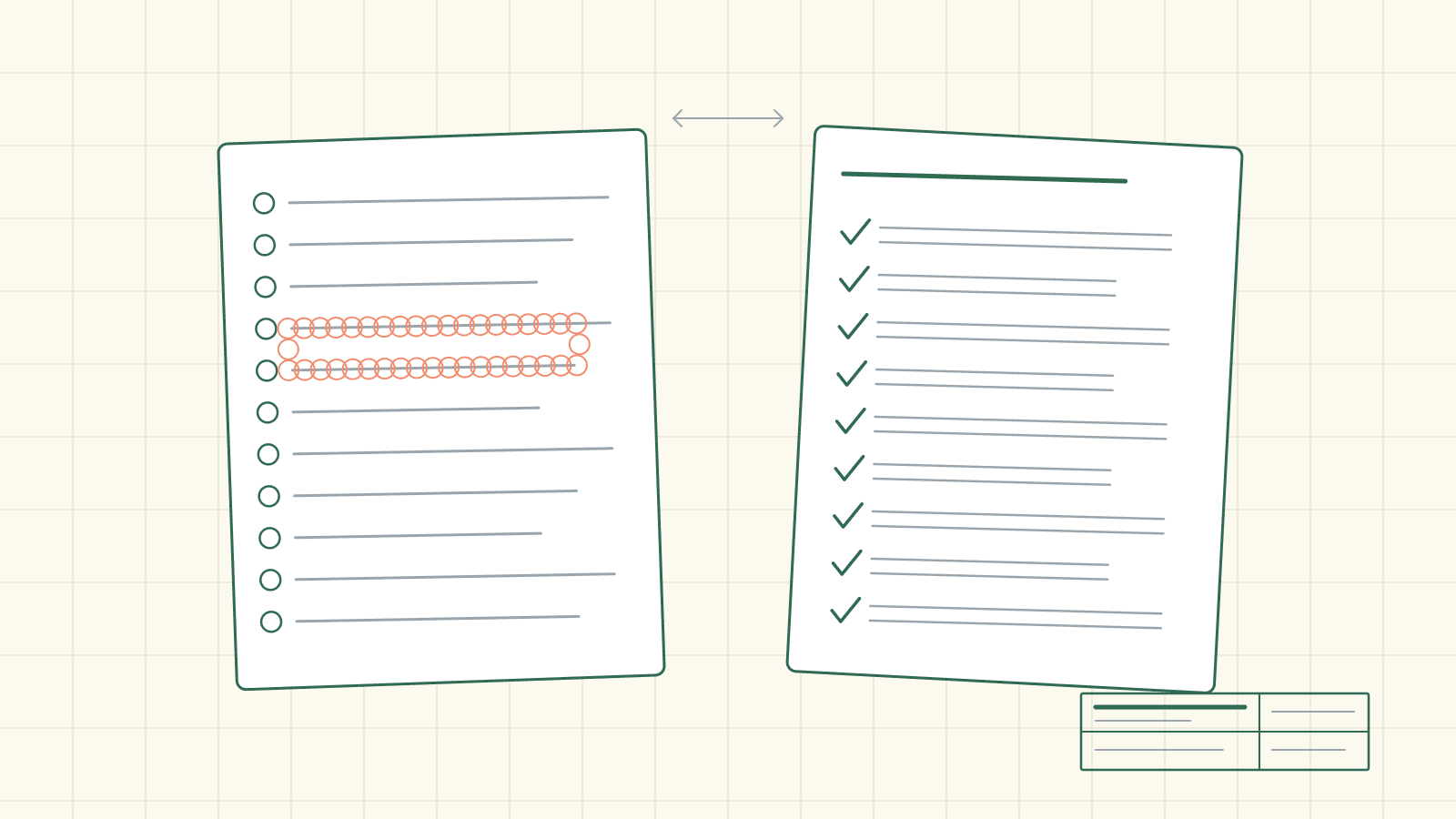
Everyone who has ever leaned on software to "help" has had the same bad afternoon. You ask it to fix one line. It quietly rewrites six. You look up and the document you trusted is gone — replaced by something you never approved and can't easily get back.
CrossBeam was built to never do that.
Here's the thing: a plan review produces two things a person actually acts on — a list of findings and the letter that carries them. Both are the record. Both go to someone who will do something because of them. So the rule underneath the whole review is plain: you can ask it to change your work, but nothing changes until you say so.
What the builder gets
A builder running a pre-check on their own set doesn't want a lecture. They want to triage. Read a finding, decide it's over-cautious, ask the review to soften it or drop it. Read the next one, decide it's dead-on, keep it exactly as written.
When they ask, the review doesn't reach into the findings and start editing. It comes back with proposal cards — one per change it's suggesting — laid out right in the findings drawer. Each card is a choice:
PROPOSED CHANGES — 4 findings
  Apply       keep this change
  Skip        leave this finding as it was
  Apply all   take every proposed change at once
Until the builder clicks, nothing is written. The findings sit exactly as they were. And if something goes wrong on the way, the error is visible, with a Retry — never a silent half-save that leaves the builder guessing what actually landed.
What the city reviewer gets
On the other side of the counter, a city reviewer is refining a corrections letter — the document that goes out under the city's name and seal. That is the last place on earth anyone wants a surprise rewrite. The same rule rides every letter surface, the applicant's response letter included — the reply that goes back the other way.
So the reviewer can talk to it: tighten this paragraph, cite the section here, make the closing firmer. What comes back is not a letter that has already replaced theirs. It's a proposed version, shown side by side with the one they have — the changed passages easy to spot — with Accept and Reject.
Accept promotes the proposed version to current. Reject discards it, and the current letter is untouched — the same letter, word for word, that they had before they asked. The document already sitting in front of them is never overwritten behind their back.
The review proposes. The person decides. Nothing is saved until someone says so.
What you approved stays approved
Two more guarantees fall straight out of that one rule.
First, once you accept a version, it's kept. You can compare any two versions and download the latest. The history doesn't evaporate the moment you move on to the next thing.
Second — the subtle one — an edit you approved is treated as authoritative. If the letter later gets a final pass to smooth its wording into the department's voice, that pass leaves your approved lines exactly as you approved them. It doesn't quietly fold a decision you'd already made back into something you'd talked it out of. What you signed off on is what ships. Only the lines you never touched stay open to cleanup.
A review you can come back to
None of this would count for much if the conversation were disposable. It isn't.
The review is something you can talk to about a finding, and while it's working you see plain, friendly progress — Reading finding cr-54, Looking at sheet A-2 — not a spinner and a shrug. And the conversation holds. Navigate away, reload the page, close the tab and come back tomorrow, and it's still there, still tied to the same review, ready to pick up where you left off. You can reopen a past conversation and keep going against the same set of findings.
That matters because steering a review is rarely one clean question. It's a back-and-forth. The point of keeping it is that the back-and-forth survives the interruptions a real workday is made of.
An illustration, not a promise
Treat the specific numbers here as an illustration of how the capability behaves — not a promised result, and not a standing accuracy claim.
A builder might pull up thirty-odd findings on one run, ask the review to soften three and drop one, and get back four proposal cards: Apply the two that are right, Skip the two that aren't, and watch the findings change only where they clicked. A reviewer might ask for a firmer closing paragraph and get exactly one proposed version to accept or reject. The counts will be different every time. What doesn't change is the shape of it — the count only moves on a click.
Why it's built this way
A finding is a flag to verify, not a ruling, and your local jurisdiction is the one that decides your permit — always verify a code call against the office that will actually stamp the set. The review's job is narrower and more useful than deciding for you: do the reading and the drafting fast, then hand you something you can see before you keep it. Steer it where you point it. Stop it where you stop it.
That's the whole design, in one line. The review proposes. You decide.