Only the Comments That Are Yours
A city reviewer re-checking a resubmittal wants to verify her own comments — not every division's.
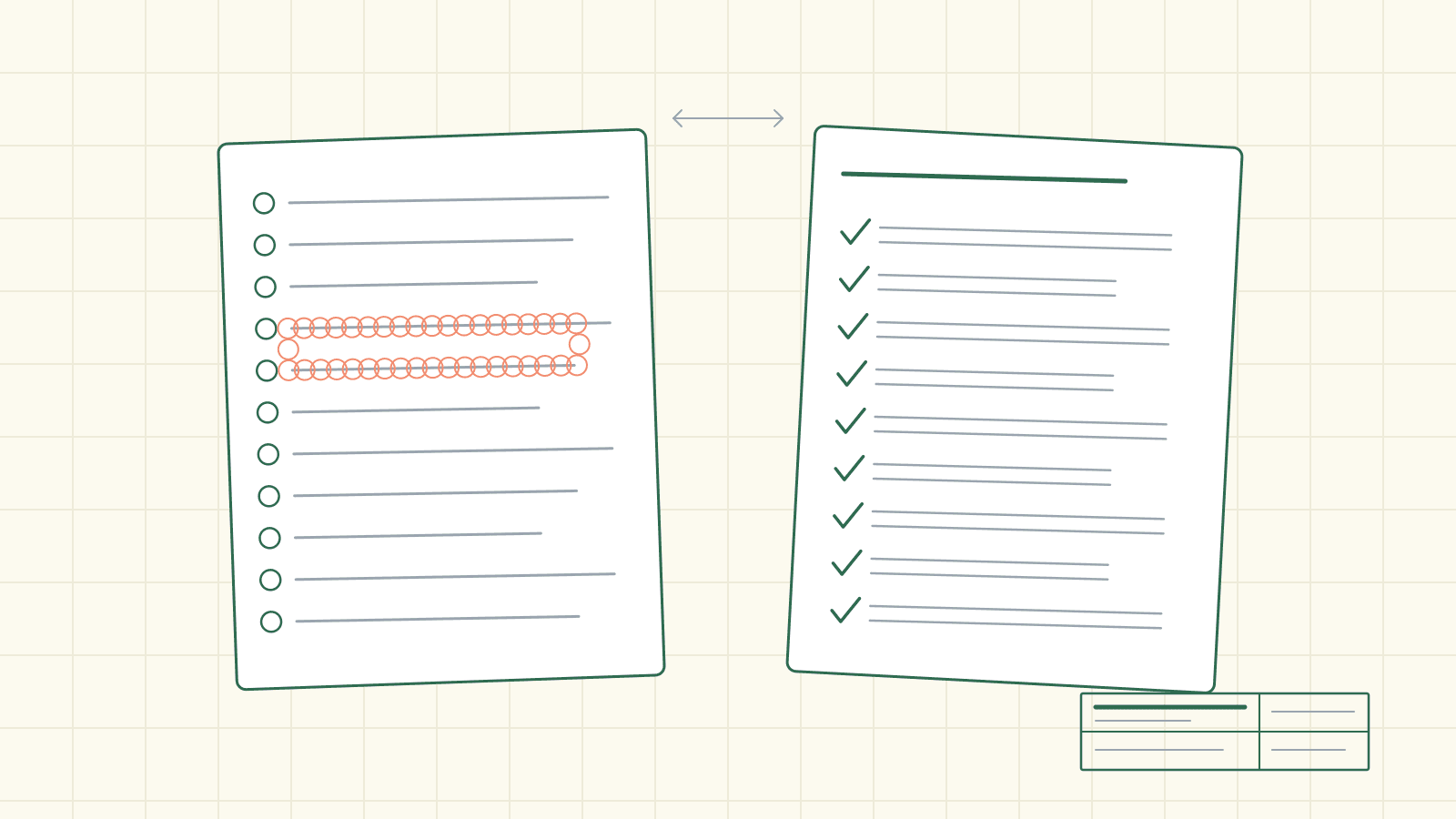
A city planner sits down to re-check a resubmittal.
She knows this project. A few weeks back she read the first set, marked her comments, and sent the applicant a letter. Now the revised set is back on her desk, somewhere in a queue of others just like it, and her job is narrow and specific: did they fix the things she flagged? Not the structural notes — those belong to the Building side. Not the driveway grade, not the fire turnaround, not the landscape palette. Her comments. The ones with her initials on them.
So she opens the re-check and asks it to do exactly that: confirm the resubmittal answers the comments made last round.
Sixty-seven rows, and thirty-one were hers
The first time a re-check ran that way, it pulled everything.
Every City comment on the record came back as a row to verify. It was thorough — it read all of them, checked all of them. But that was the problem. The planner wanted the comments that were hers, and what landed in front of her was every division's correspondence.
What one re-check surfaced
  67   City comments on the record
  31   the planner's own
  36   Building, Fire, Public Works, Landscape (31 + 36 = 67)
  18   of the 67 — fees, hearings, boilerplate no plan sheet can show
Sixty-seven rows. Thirty-one were the planner's own. The other thirty-six belonged to Building, Fire, Public Works, and Landscape — real comments, carefully checked, and none of them hers to answer. And eighteen of those sixty-seven weren't plan-sheet comments at all: fees, hearing dates, the standard boilerplate that rides along on every letter and that no drawing can satisfy.
There was a subtler one, too. One of the Landscape notes had been written after the applicant resubmitted — so it couldn't have been a prior comment at all. It was a note about the new set, not a comment the new set was meant to answer. Yet there it sat in the planner's pile, waiting to be checked against drawings it came after.
None of this was wrong, exactly. It was just everyone's. And a reviewer re-checking her own round doesn't want everyone's.
Now it opens on what's yours
Here's the turn: the re-check now opens on the reviewer's own comments.
A planner sees the planning comments. A building reviewer sees the building comments. The rest aren't gone — they're one click away, behind a plain "Show other divisions' comments" switch, with a line that says exactly how many are hidden and whose they are. Nothing is buried, and nothing is skipped: the re-check still reads every letter on the record. It just starts where the reviewer actually works.
Show me the comments that are mine. I'll ask for the rest when I want them.
That one change took care of the stray Landscape note on its own. When the re-check opens on the planner's own comments, a note from another division — written after the resubmittal, by someone else, about a different concern — simply isn't in her pile anymore. She didn't have to recognize it, flag it, and set it aside. It was never on her screen to begin with.
The letter you send is the letter you saw
The last piece is the one that closes the loop.
When the re-check drafts the applicant letter, that letter matches what's on screen. If the other divisions are hidden, their comments aren't in the letter either — the open items she's actually sending back are the ones she just verified, and nothing sneaks in from a division she never opened. What she read is what the applicant reads.
And the letter comes out on her own division's letterhead. A planner's re-check prints on the planning letter, in the planning voice; a building reviewer's prints on the building form. The re-check knows whose review it is, so the paper that leaves the building looks like it came from the right desk — because it did.
That's the whole arc, start to finish. The reviewer opens the re-check and sees her own comments. She checks the resubmittal against them, pulls in the other divisions only if she wants to, and sends a letter that says precisely what she verified, on her own stationery.
It's a small thing and a large one. Small, because it's one screen opening on the right rows instead of all of them. Large, because the person on the city side is working a queue, and every resubmittal she opens used to start with the same chore — sorting her own thirty-one comments out of someone else's sixty-seven before she could even begin. Now the sorting is done before she sits down.
Everyone else's work is still there, still checked, one switch away. But the re-check belongs to the person running it — only the comments that are yours, and the letter to match.