Right to the Spot on the Sheet
Every finding is a door to the exact place it's about — click it, the drawing moves there; hover it, the region lights up.
A finding is only half an answer.
The review hands you a line — the setback on the site plan doesn't hold, or this callout and the schedule disagree — and it's probably right. But "probably" is the whole problem. Before you can act on a finding, you have to go find the thing it's talking about. Which sheet. Which corner of which sheet. Which dimension string, buried in the smallest type on a page that's mostly lines.
On a forty-sheet set, that hunt is the tax. You scroll, you zoom, you squint, you lose the thread and start over. And here's the thing: a finding you can't quickly check is a finding you can only half-trust. You either take its word for it — or you spend a few minutes proving it to yourself, one finding at a time, all day.
CrossBeam already reads the drawing. This is about what happens after.
Click, and the sheet takes you there
Pick a finding. The sheet moves.
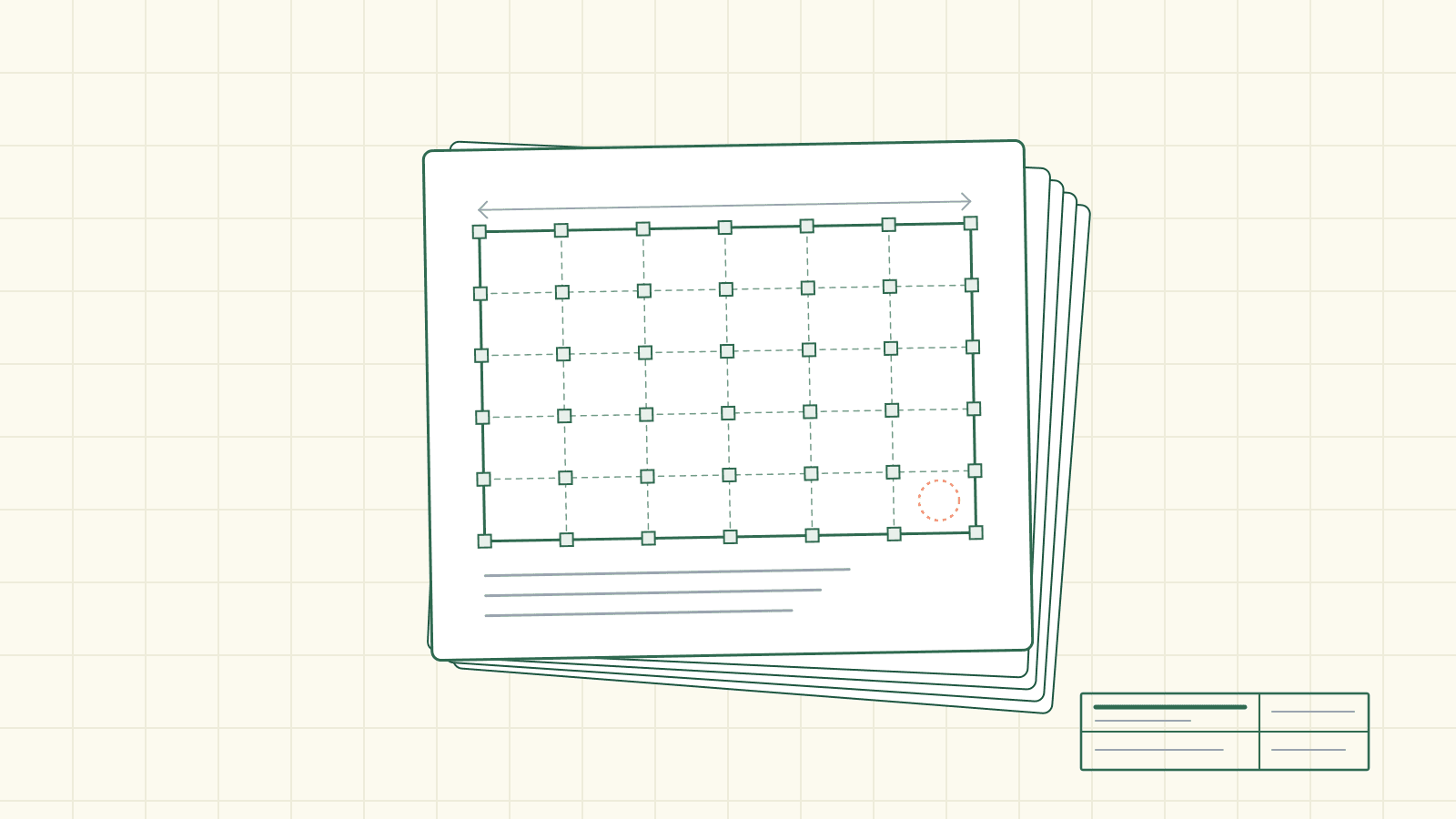
Not to the top of the page. Not to the sheet in general. It zooms straight to the exact region the finding is about — the area actually drawn, right there on the page, framed and waiting. Hover the finding instead of clicking, and that same region lights up in place, so you can run down a list and watch each one glow where it lives without leaving the page you're on.
You don't take the finding's word for it. You look at the spot and decide for yourself.
A finding you can jump to is a finding you can check. A finding you can check is one you can trust.
That's the whole move, and it's smaller and more useful than it sounds. The value of a plan review isn't the list. It's whether you believe the list — and belief, for anyone who reads drawings for a living, comes from putting your eye on the actual line, not from being told about it.
As tight as the thing deserves
The zoom isn't one-size. It reads the size of what it's pointing at and frames accordingly.
A tiny callout — a header size in a bubble, a net-clear dimension in the corner of a window schedule — gets a close crop, pulled right up to the type. Something larger, a region that covers a good part of the sheet, just gets framed, not shoved in your face. And when the matter really is the whole sheet, it doesn't zoom at all — because zooming into everything is the same as pointing at nothing.
It's the difference between a colleague who says "page twelve, somewhere" and one who puts a finger on the line.
When it can't point, it doesn't
Here's the part that earns the rest.
Sometimes the review can't say exactly where a thing lives. Maybe the issue is an absence — something that should be on the sheet and isn't. Maybe the spot genuinely can't be pinned down. When that happens, it does the honest thing: it doesn't invent a location. It leaves the finding without a spot rather than guess at one.
That restraint is the trust move. A marker that always fires — even when it's guessing — teaches you, fast, to distrust every marker. One that only points when it's sure is one you can actually follow. The finding still stands; it just doesn't pretend to a precision it doesn't have.
What it has looked like
Treat the numbers here as an illustration of how the capability has behaved — not a promised result, and not a standing accuracy claim.
On one measured check over a dozen practice items pulled from real plan sheets, it landed on the right spot 8 out of 8 times where a spot existed — and correctly declined to point on all 4 items where it shouldn't have. On a separate committed run it hit 8 of 8 again, and this is the fine-grained part: on a window callout that measured only 180 by 55 pixels — smaller than a fingertip laid on the page — it landed within about 22 pixels of dead center.
Close enough that when the sheet stops moving, the thing the finding is about is sitting right under the frame. That's the point of the whole exercise: not "here's a sheet," but "here's the spot."
The same move for both sides of the counter
A builder triaging a pre-check and a plan checker working a submittal are doing the same thing from opposite chairs — deciding, finding by finding, what's real and what to do about it. Both get the same one-click show me where. The builder confirms a flag before reworking a sheet. The reviewer confirms it before it goes in a letter. Neither has to hunt.
None of this decides your permit. Your local jurisdiction does that, and a finding is a flag to verify, not a ruling — anything that carries code stakes, confirm it with the people who'll stamp it. What changes is where the checking starts. Not with a sentence, a page number, and a scavenger hunt. With the sheet already turned to the exact place the finding lives — so you never have to take its word for it.