The Anaheim Cul-de-Sac
A lot with an awkward shape, a fire setback nobody mentioned, and easements that live in Edison's filing cabinet.
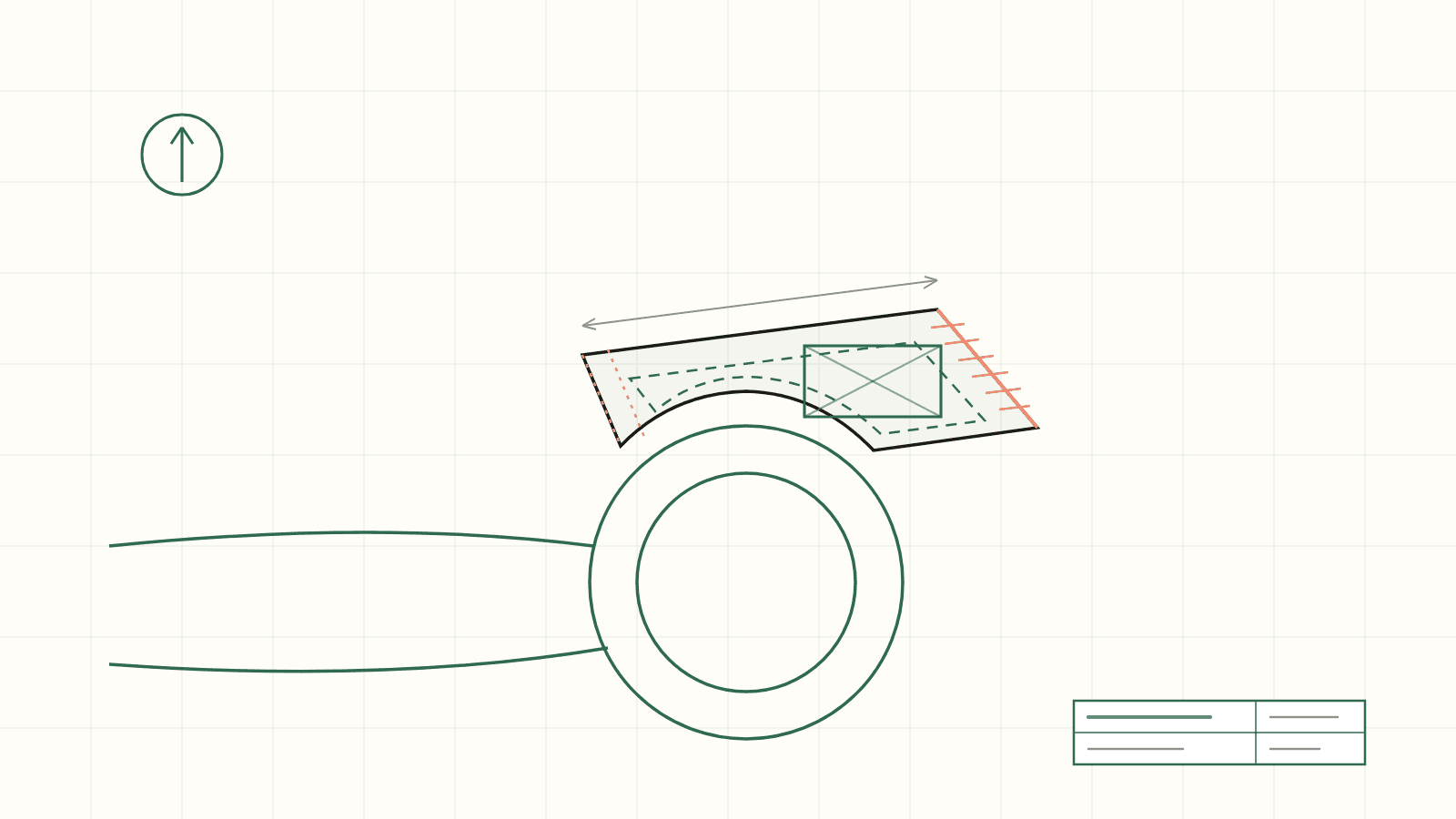
Mario has a lot in Anaheim that won't leave him alone.
It's a cul-de-sac property — one of those irregular shapes where the front boundary curves with the street and the side lot lines angle in at odd degrees. He's designed the ADU, sized it to the 1,200-square-foot maximum, positioned it where it should fit. The city's pre-approved plans won't work — their standard footprints assume rectangular parcels — so he's doing a custom design. He's talked to planners, done a pre-review, gotten what he thought was a green light.
Then it comes back. Appendix F.
"Apparently, because of the awkward shape — it has a unique shape, it's in a cul-de-sac — it triggered this Appendix F that now it's challenging the design," Mario says. "I have to go back and redesign it because now there's a setback involved."
Appendix F. Fire apparatus access. When a property's geometry hits certain thresholds, the fire department gets a say in where you can build. It creates setbacks that don't show up on the standard zoning checklist. In this case, a 25-foot fire setback that Mario's design steps right into.
The city's own pre-review didn't flag it.
"I always tell Cameron about my horror stories with Anaheim," Mario says. "This city specifically is very strict. And the learning curve for me was always doing kind of a pre-checklist and talking to planners — both planners and building and safety. You have to talk to both of them because they're not communicating."
Two departments. Same city. Not talking to each other.
But Appendix F wasn't even the worst part.
"Being on-site and looking at the property, anything that has a utility post, there's clearly an easement there," Mario says. "So I knew this setback." He points to one side of the lot. "But I wasn't aware of this setback down here, and there's no utility easements."
No visible infrastructure. No utility poles, no transformer boxes. But the city comes back with an SCE easement map showing a 10-foot setback on one side, six feet on another, six on a third. Setbacks that only exist in a document held by Southern California Edison — not the city, not the county assessor, not any public GIS layer a designer would normally check.
He called SoCal Edison himself. That's where he learned the utility company maintains its own easement records, separate from the city's, and that the city's planners don't always have access to them. When ADUs first started rolling through, a lot of cities didn't even know Edison's easements existed in certain areas.
"Those are things you would have not known until you get through planning," he says.
The things that make permit review genuinely difficult aren't the code sections — those are published, structured, searchable. It's the hidden inputs. The fire setback that only triggers on irregular lot geometry. The utility easement that lives in Edison's records, not the city's. The planner who approved something in pre-review that building later rejects because fire never weighed in.
Mario's not asking for the AI to design the ADU. He's asking for it to tell him, before he starts, that this particular lot on this particular cul-de-sac is going to trigger fire access review, that Edison has easements on two sides the city won't mention until round two, and that the 1,200-square-foot plan he's about to spend weeks on needs to be 950 to clear all the setbacks.
Cameron put it simply during that same conversation: "If we have the HCD and where the code applies, we can submit all that within our submittals. That way, if there's any issues — or even if the city comes back — we can reference what code it is."
State law at the base. City ordinances on top. Project-specific variables — lot shape, utilities, access — layered over that. Most of the surprises designers face aren't unknown unknowns. They're known unknowns that live in the wrong database, or the right database that nobody checked.
Mario eventually got his Anaheim project sorted. Redesigned around the fire setback, confirmed the Edison easements, resubmitted. The Appendix F issue alone probably cost two months and a full redesign.
For a one-person drafting practice, two months on a single correction isn't just a delay. It's two months of not taking new projects, not generating revenue, not doing the creative work that got you into design in the first place.
"For someone in my position," Mario says, "this would help a lot."
He's not talking about replacing what he does. He's talking about knowing what he's walking into before he walks into it.
That's the cul-de-sac problem. Not the shape of the lot. The shape of the information around it.