The Change Nobody Asked For
When a resubmittal lands, the second review shows exactly what moved between round one and round two — including what nobody flagged.
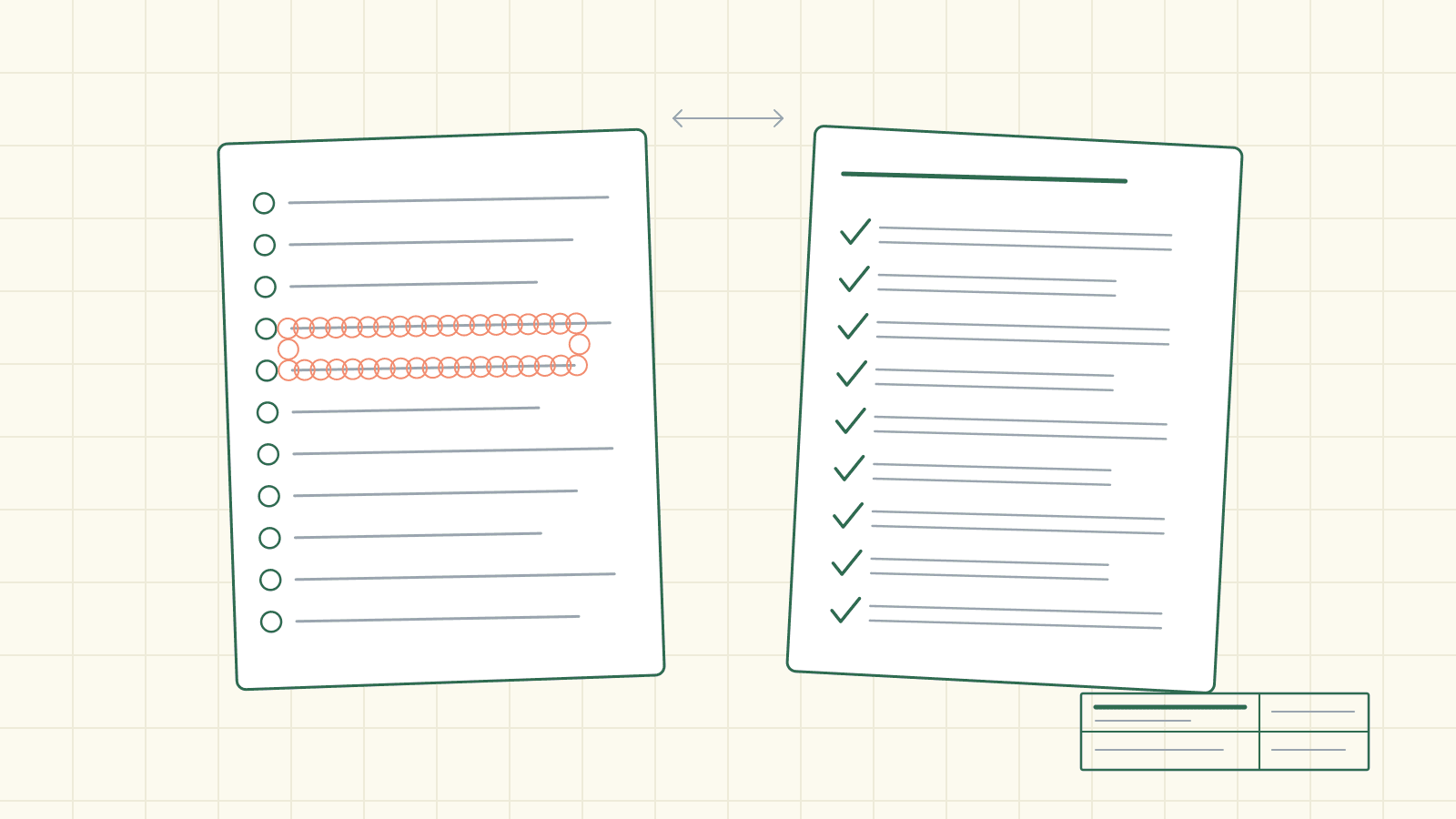
A resubmittal lands on a plan checker's desk, and the clock starts over.
She's seen this project. Weeks ago she read the first set, wrote her comments, and sent the letter. Now the revised set is back — a second thick stack — and before she can approve anything she has to answer a question the letter alone can't: did they actually fix what she asked?
The old way to answer it is the one everybody knows. You put the two sets next to each other and you read. Sheet one against sheet one. Sheet two against sheet two. Forty pages against forty pages, hunting for the lines that moved — trusting your eye to catch a dimension that slid a quarter inch or a note that quietly disappeared. It's slow, it's thankless, and it's the part of the job nobody writes a staff report about.
Here's the thing: a resubmittal isn't really one question. It's two.
Two questions, not one
The first is the obvious one: did they fix what I asked? Every comment on the letter either got answered or it didn't, and the checker has to confirm each one against the new drawings.
The second is quieter, and it's the one that bites. What did they change that I didn't ask about? A wall that came out. A window that moved. A parking count that ticked up by one. Nobody flagged it, so nobody's looking for it — which is exactly how an unrequested change rides through to approval and surfaces later, in the field, as a problem.
A page-by-page read is supposed to catch both. In practice it's built for the first and blind to the second. You go in looking for the comments you wrote; the change nobody wrote a comment about is the easiest thing in the world to read right past.
What changed between the two sets
So the second review does the comparison first, before the checker opens a single sheet.
It holds the earlier set and the newer set together and reports what moved between them. The project's key numbers come back in two columns — the earlier set beside the newer set — with the ones that changed called out. The changes group two ways: by topic, filed under the same headings a staff report is written under, and by sheet, every page marked Changed, Unchanged, Added, or Removed, with the earlier crop sitting right beside the new one so the checker sees the before and after at the spot it happened.
None of that is a verdict. It's the reading she was going to do anyway — two sets, page by page — done up front, so she opens the resubmittal already knowing where to look.
The note beside each change
Then comes the part that answers both questions at once.
The checker's own correction list is right there, and the review sets each change against it. Every change carries one of two notes. If it answers something she flagged, it says so — it Answers the comment it resolves. If it answers nothing on the list, it says the other thing:
The second review answers both halves of a resubmittal at once: did they fix what I asked — and what did they change that I didn't?
Not asked for. Those three words are the whole point. A change marked Not asked for is something the applicant did on their own that nobody requested — the wall that came out, the number that moved — surfaced and labeled instead of buried in forty pages. The changes that answer comments are the resubmittal doing its job. The ones marked Not asked for are the ones to read first.
A single report might show five changes, one of them not asked for. Treat that as an illustration of one run, not a promise of what any set will hold:
WHAT CHANGED — ROUND 1 → ROUND 2   (illustrative; one report)

  Rear setback ....... 5'-0" → 7'-6"   Answers comment 4
  Parking count ...... 11 → 12         Answers comment 7
  Egress window ...... added           Answers comment 2
  Guardrail note ..... revised         Answers comment 9
  Trash enclosure .... relocated       Not asked for
Four of those close comments she wrote. The fifth is the one she'd never have gone looking for.
Not the same as the other two
CrossBeam reads a resubmittal three different ways, and it's worth being clear which one this is.
One review reads a single set against itself and catches the sheets that disagree — the roof pitched two ways, the floor area that won't reconcile. That's integrity inside one round. Another opens a re-check on just the reviewer's own prior comments — did they fix my items, not every division's.
This is neither. This is the structural difference between round one and round two — the whole set, earlier against newer — with the unrequested changes pulled into the light. It's the only one of the three that answers what did they touch that I didn't ask about?
A letter-ready document
When she's done reading, the report doesn't trap itself on screen. The whole thing copies out clean — headings, the two-column table, every change and its note — ready to drop into a staff report. Or it downloads as a Plan Change Report, a document already written.
None of it decides the permit. A change the review surfaces is a flag to verify, not a ruling, and the approval is still the reviewer's and the jurisdiction's to give. What changes is the starting point. The resubmittal used to begin with the same chore every time — two sets, side by side, page by page, hunting for what moved. Now it begins with the answer already on the page: here's what changed, here's the comment each change answers, and here — read this one first — is the change nobody asked for.