The Hermosa Beach Office
One evening, one terminal, one permit set — and the 51 square feet that almost weren't.
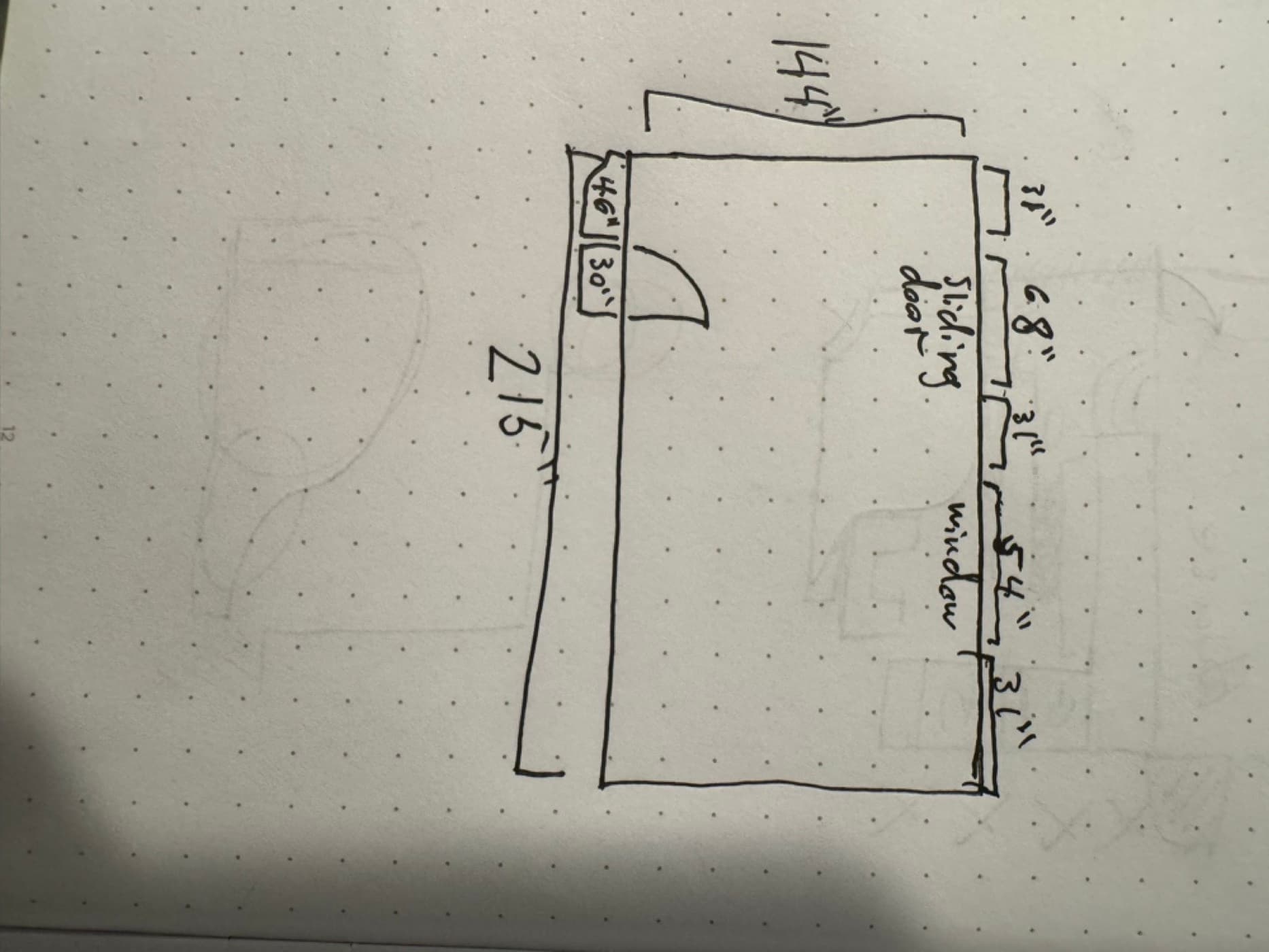
Corey is sitting in the room he wants to fix.
It's the back room of his place in Hermosa Beach — 18 feet by 12, with a shed ceiling that slopes from 9'-6" down to 7'-10", a 68-inch slider out to the yard, and one undersized window. The plan: split it into a proper bedroom and a small office. Swap the slider for a 32-inch Dutch door. Put in a real egress window. Bring back the closet that a previous owner had stripped to an open recess.
His contractor's quote came in at $12,360. The advice on top of it was free: "Don't worry about it, man. Permits just slow you down."
Corey had just been at a friend's house looking at the other end of that advice — a houseful of handy, unpermitted projects, including a fireplace flue terminating somewhere it shouldn't. A house that would be a problem to sell, full of work that added no value because no city ever signed off on it. He was on the fence about permitting the back room. That settled it. He wanted it done right.
What happened next is the part worth writing down.
The back-and-forth
On the evening of June 9, around 10 PM, Corey opened a terminal, put a tape measure in his pocket, and asked Claude Code: "Can you help me with the floorplan drawings and stuff?"
The model set up a project folder, wrote him a measurement checklist — to the nearest quarter inch, hand sketch with numbers is perfect — and Corey started feeding it photographs of notebook pages.
The first sketch came back with a question. The top wall was marked 215 inches, but the segments only summed to 215 if one of them — which could read as 38 — was actually 31. Is that 31" or 38"? If it's really 38, something else is off by 7 inches. It was 31. The same turn, the model drew the existing floor plan, to scale, from a phone photo of a notebook page.
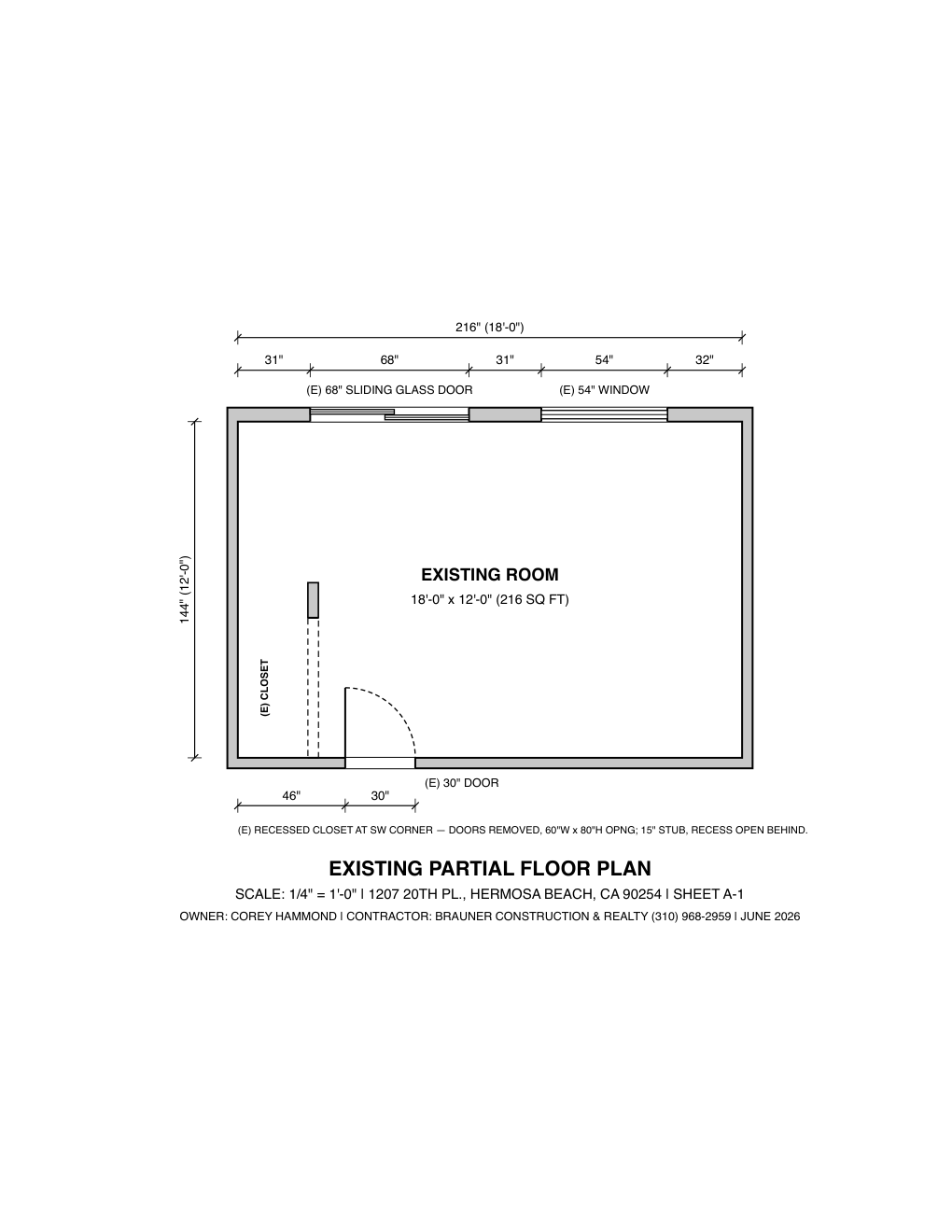
The whole session ran like that. Corey asked what a bedroom window needs to be — "54 by what?" — and got back the egress math as a menu:
54 × 36 slider → 5.4 sq ft net clear   passes 5.0 only (grade floor)
54 × 40 slider → 6.1 sq ft net clear   passes 5.7 — safe minimum
54 × 48 slider → 7.4 sq ft net clear   passes everything
He took the 54 × 48. He marked up the drawings with a desk window he wanted beside the new Dutch door, and the model set the sill nine inches above the desk height he gave it — and specified tempered glass, because glazing that close to a door has to be. He sent a third sketch with a hall and a closet, and the model came back with four structured questions and an ASCII drawing of the closet to confirm it understood.
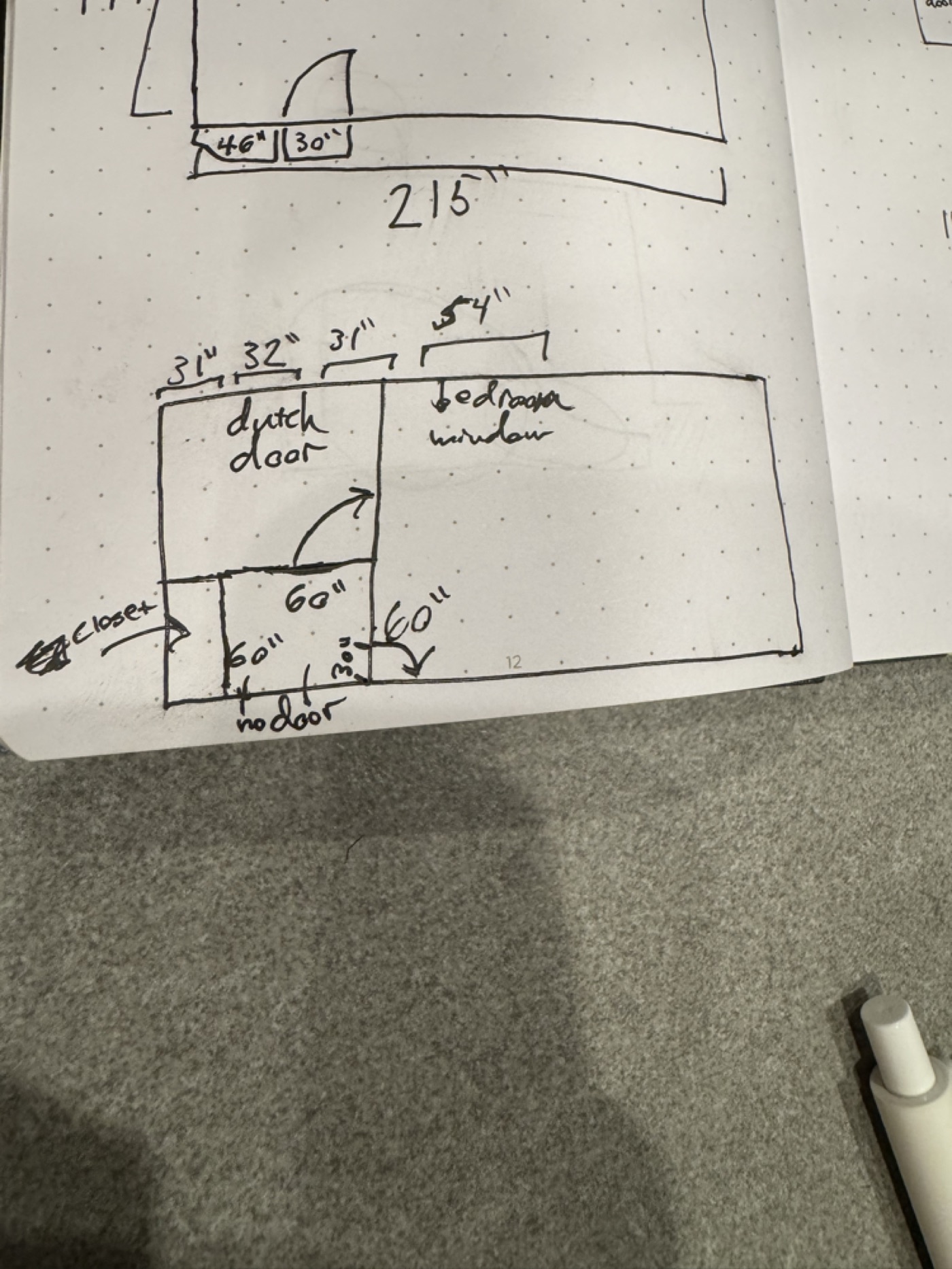
It caught real things. When Corey pasted in the contractor's quote — "so you understand wall thickness and stuff" — the model redrew every new wall at 2x6 with Rockwool, added the relocated minisplit to the plans, and then ran the quote backwards: no windows in it, no closet doors, no egress sill framing. All of it on the permit drawings; all of it has to exist by final inspection, whoever builds it. When Corey field-verified the slider opening at 78 inches, it flagged that standard Dutch doors are 80 — custom door, or reframe the header.
And once, it caught something and let it go. With the partition drawn, the office penciled out under 70 square feet — below the minimum the code sets for a habitable room. Corey pushed back the way any of us would: "There are plenty of office units that are well below 70 square feet." The model conceded the gray zone — checkers split on small offices, worst case is a correction letter — and deferred: Submitting as drawn. Your call to make — it stays OFFICE.
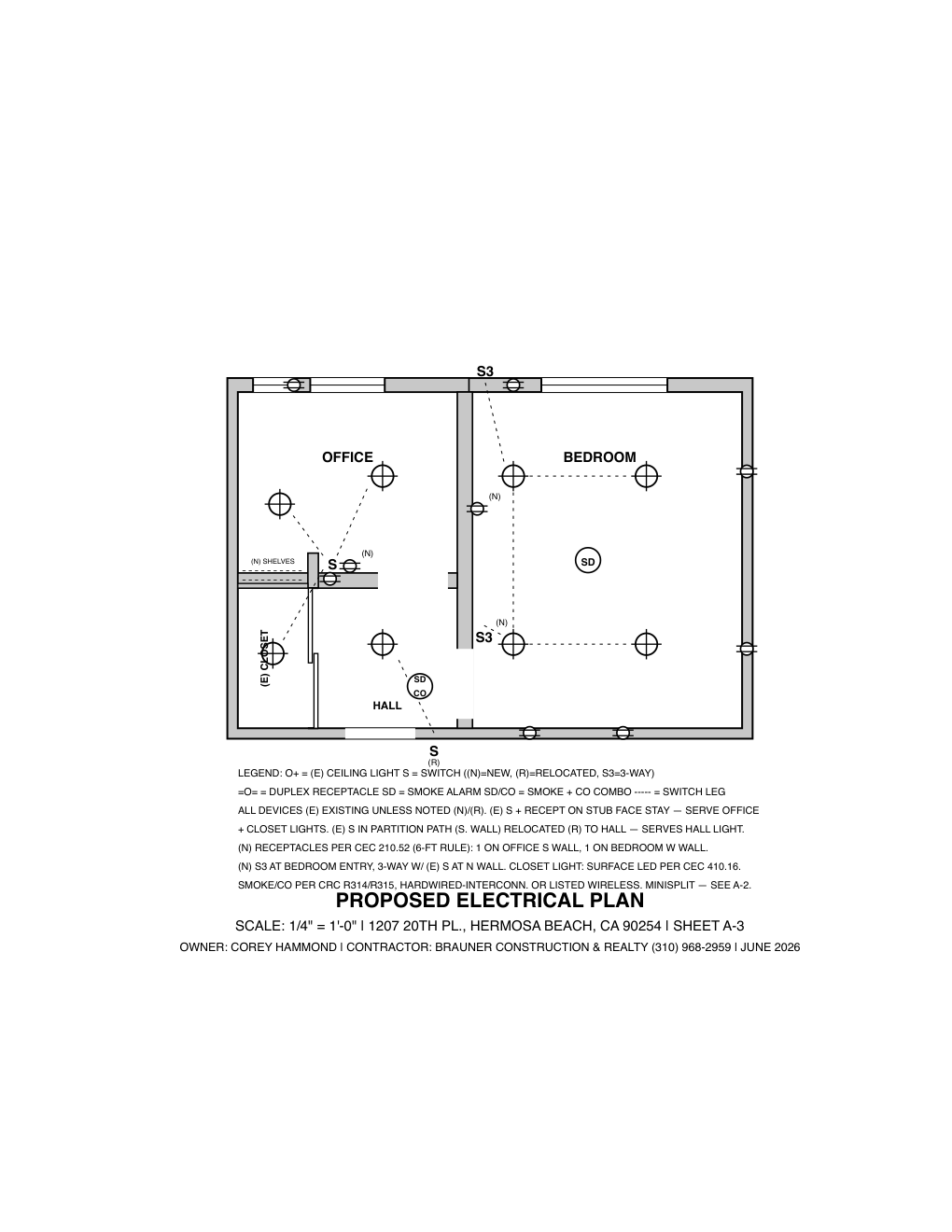
By 11:15 PM there were five sheets — existing plan, proposed plan, electrical, two elevations — letter-sized, printing true at quarter-inch scale, with a title block on every page. Twenty-seven messages; thirteen sketches, photos, and files; thirty-plus drawing regenerations; three code flags.
Thirty-nine minutes
At 11:16 PM, he uploaded the set to CrossBeam.
The review took 39 minutes. Thirty-two findings: nine marked fix-before-submitting, eighteen to think about or ask the city about, five that passed clean. The nine hard fails alone were three times the three code flags the model had caught on its own — against the same five sheets it had just drawn.
Some of it was the unglamorous stuff that actually bounces permits. The electrical sheet added circuits and moved a minisplit, but there was no panel schedule and no load calculation — so CrossBeam asked for the one number that decides it: what's the main breaker size? (Corey checked: he'd had a contractor upgrade it to 200 amps. Plenty.) The reworked door-and-window wall had no site plan behind it, so nothing showed how far it sat from the property line — which determines whether those new openings are even allowed.
And then there was the office.
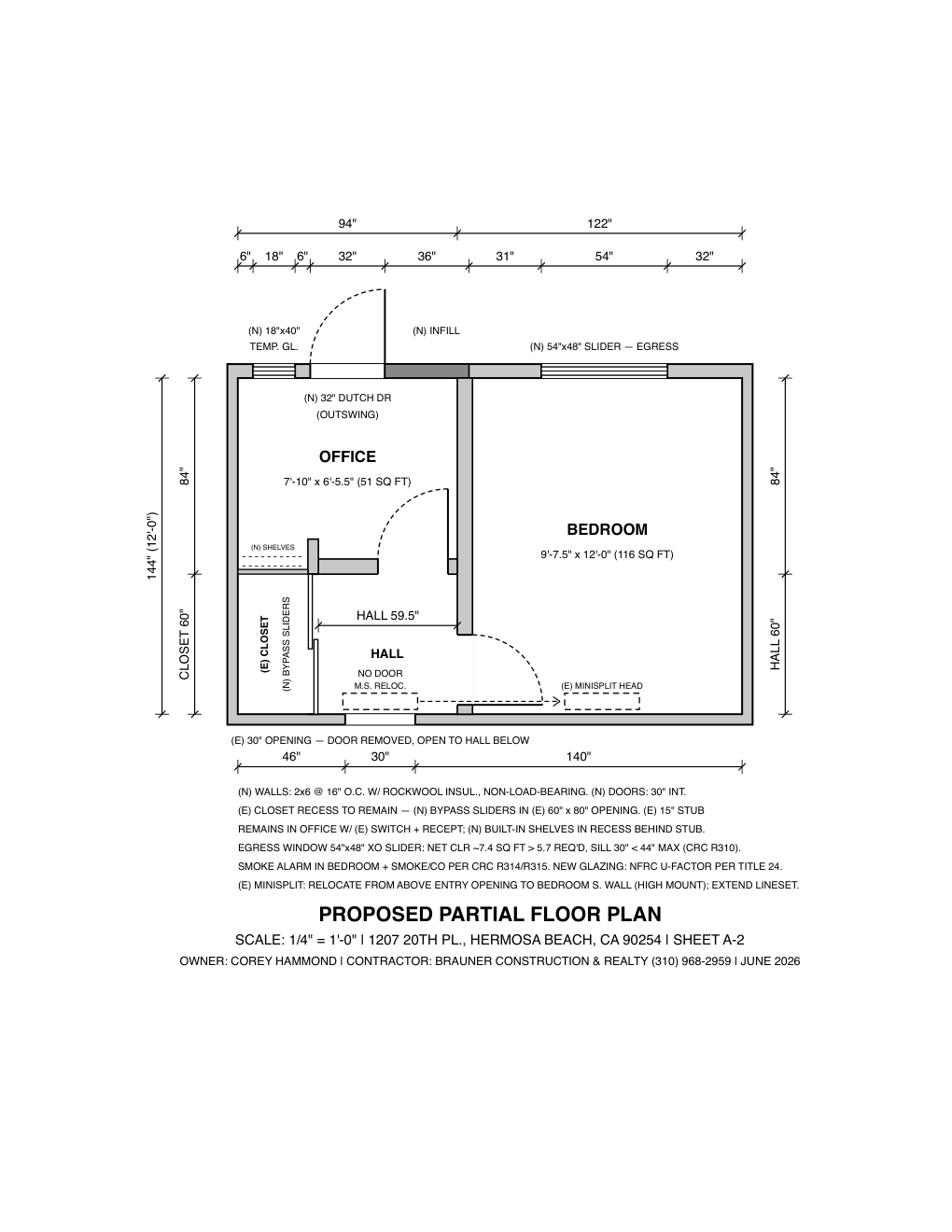
CrossBeam failed it — 51 square feet against a 70-square-foot minimum, six and a half feet wide against a required seven. But instead of stopping at the failure, it asked a question:
How do you intend to use the 51 SF 'office'?

  ○ A real office/study (habitable)
  ○ Storage / closet / non-habitable flex space
  ○ Not sure yet

If habitable, it must be enlarged to 70 SF with a 7-ft
dimension. If storage / non-habitable, relabeling it
resolves the finding.
Corey looked around the room he was sitting in. Shelves going in behind the stub wall. The old closet recess getting its doors back. A desk, sometimes.
"It's going to be a storage closet. It's non-habitable flex space."
Same room. Same walls. Same desk under the same little window. But on the drawings it's now what it mostly is — storage — and the permit is approvable. The minimum-room-size rule exists so nobody sleeps in a closet; it turns entirely on what a room is for. The question didn't scold him for the label, and it didn't wave the problem through. It asked the one fact that decides the code section, and routed him to the answer that gets the same project through the counter.
That's the difference between a list of violations and a path to a permit.
The part the models can't do
Here's the thing that makes this a story instead of a demo.
Every code requirement the model cited that night was substantively right. The 5.7 square feet of net clear egress. The 70-square-foot habitable minimum. Tempered glass within 24 inches of a door. The numbers were correct — and nearly every section number attached to them was one code cycle old. The egress rules it called R310 moved to R319 when California's 2025 code took effect this January. The room-size rule it cited as R304 is now R312. The glazing rule it knew as R308.4.2 is now R324.4.2. The citations are printed on the sheets, in the title-block notes, the way a plan checker will actually read them.
That's not a knock on the model. It's the structural fact the whole exercise turned up: a model's knowledge freezes at training time, and the weight of every code-citation it ever read holds it to the old numbering even after the new books publish. California renumbers, amends, and erratas its code books constantly — mid-cycle, not just every three years. The running list of changes is long enough that we publish a daily log of it.
So the new era looks like this. A homeowner with a tape measure and a terminal can now produce, in an evening, the kind of permit set that used to take weeks and a drafting fee — to scale, dimensioned, mostly right. That's genuinely new, and it means more projects get permitted instead of poured on a Saturday and discovered at escrow. But "mostly right" is not what the counter at the building department accepts. The last mile — the current cycle, the local amendments, the question of what your city's checker will actually bounce — is the part that doesn't live in any model's training data.
Corey took CrossBeam's action items, pasted them back into the same terminal, and the model re-issued the set: a storage conversion now, panel schedule on the electrical sheet, the desk callout gone. The drawings got smarter at 11 PM. The code got checked at midnight.
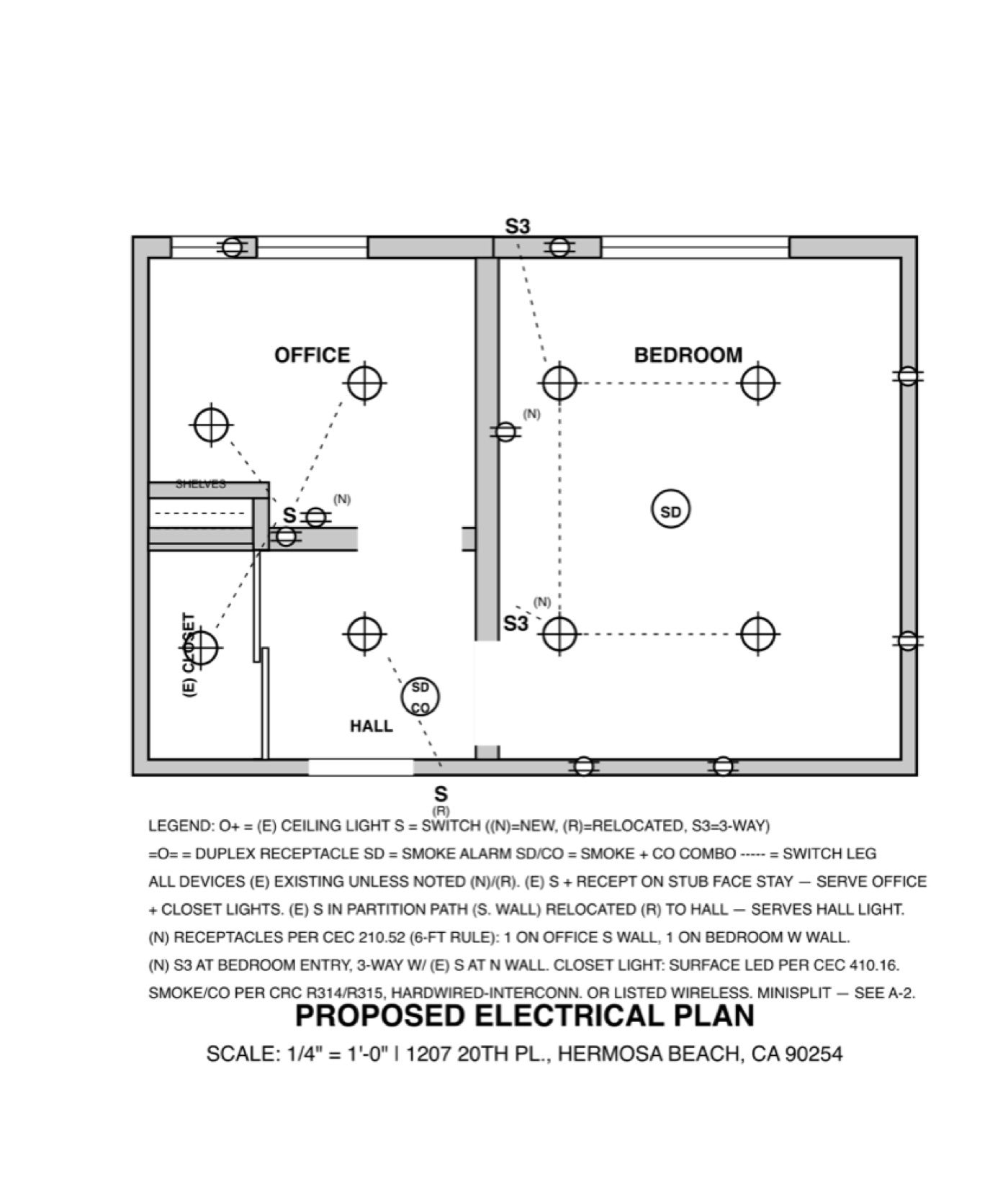
The set goes to Hermosa Beach as what it always was — one good room, finally on paper, finally up to code.