The Plan That Contradicts Itself
A permit set is a stack of drawings that all have to agree — and CrossBeam reads them against each other.
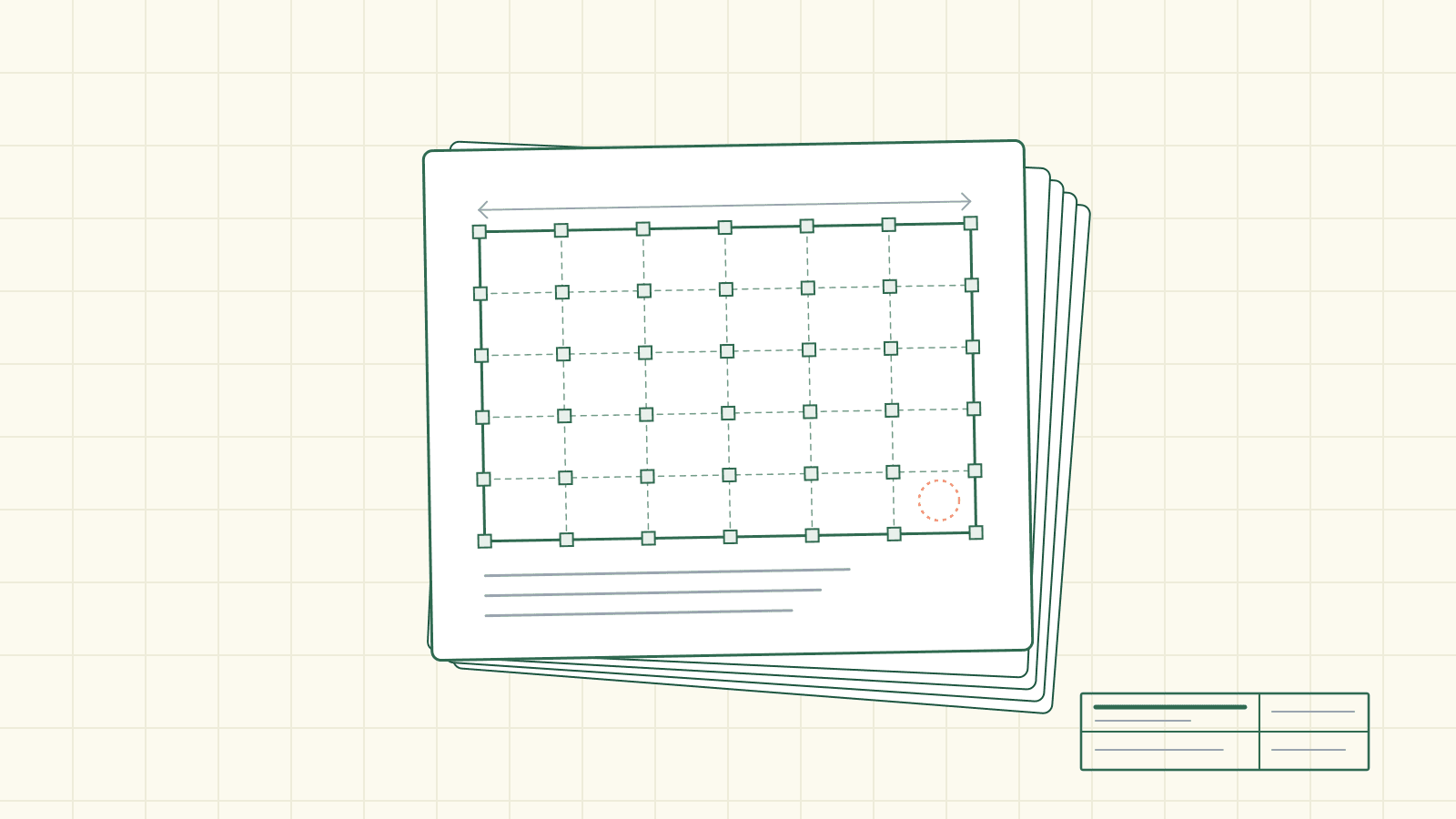
A permit set looks like one document. It isn't.
It's a stack of drawings — a floor plan, a roof plan, elevations, sections, a site plan, schedules — made at different times, often by different hands, each one true on its own. And every one of them has to agree with the others. The roof pitched on the roof plan has to be the roof drawn on the elevations. The floor area summed on the cover has to be the floor area you'd measure off the plan. The window in the schedule has to sit where the elevation puts it.
Here's the thing: nobody reads a set that way. You read it one sheet at a time.
The one nobody caught
Every builder and every reviewer has the same scar. The set goes in. It comes back with a correction that isn't about a code — it's about the set arguing with itself. A roof pitched one way on one sheet and another way on the next. A floor area that doesn't add up from page to page. A window that doesn't line up where two drawings both claim to show it.
None of it is exotic. It's the ordinary friction of a document assembled in pieces. A revision lands on three sheets and misses the fourth. A demolition note gets deleted on the plan but survives in the general notes. A dimension gets nudged on one sheet and not its twin. Each sheet, alone, reads fine. The conflict only exists in the space between two sheets — which is exactly the space a one-sheet-at-a-time read never looks at.
And it's expensive precisely because it's boring. It doesn't get caught until round two, when the city's reviewer — holding the same forty sheets you did — happens to line up the two pages that disagree.
Reading the set against itself
CrossBeam already reads each sheet closely, and it can jump you to the exact spot a finding is about. This is the next move: it reads every sheet, then checks them against each other.
It holds the whole set at once — not one sheet in view and the rest in a drawer, but the roof plan and the elevations and the schedules all in mind together — and it looks for the places the set disagrees with itself. When it finds one, it doesn't just say "check your roof." It names both sides, with the page and the spot on each — this value here, that value there, and the fact that they can't both be right.
A single sheet can be flawless and the set still be wrong. The conflict lives between the pages — so that's where the review reads.
Take a roof slope. Treat the numbers below as an illustration of the kind of conflict it catches — not a promised result, and not a standing accuracy claim.
ROOF SLOPE — one set, two answers   (illustrative)

  Roof plan .............. 4:12
  Elevations / section ... 12  /  ±3½

  Same roof. Two sheets. Two slopes.
  Flagged — with the page on each side.
One sheet calls the pitch four in twelve. Another notes it as a rise of twelve with a tolerance of three and a half. They describe the same roof, and they don't match. On a one-sheet read, each note is unremarkable. Side by side, one of them is going to draw a red-line — better it's this review's, in a pre-check, than the city's, in a letter.
The fights a set picks with itself
The disagreements come in a handful of familiar shapes, and the review watches for each. Floor area that doesn't reconcile from one sheet to the next — and where the conflict is numeric, it shows the arithmetic, so you see how the totals fail to meet, not just that they do. A demolition scope that says one thing on the plan and another in the notes. A revision that only half-landed — corrected on some sheets, stale on others. A window or opening that two drawings place differently. A fact repeated on one sheet and quietly deleted on another. Roof geometry that shifts between the plan and the elevations.
None of these is a code question. They're integrity questions — does the document agree with itself — and they're the ones that quietly eat a submittal, because no single sheet is wrong.
It points, or it stays quiet
The same restraint that governs the rest of the review governs this. A conflict gets flagged only when the evidence is actually on the sheets — a real number here contradicting a real number there, each one locatable. When two exterior walls sit apart with a dimensioned gap between them, that gap is read as what it is — two separate things — not smoothed into one because a far-off elevation makes them look continuous. The read is evidence-first: what's drawn, where it's drawn, on which page.
That's the difference between a nag and a finding you can act on. A flag that fires on a hunch teaches you to ignore flags. One that names both offending sheets and the values on each is one you can walk straight to and settle.
None of this decides your permit — your local jurisdiction does, and a finding is a flag to verify, not a ruling. What changes is when you find out. Not in round two, from a reviewer holding your set against itself. In the pre-check, before it ever reaches the counter — with the two sheets that disagree already sitting side by side, and the exact spot marked on each.